Column · @trevorkngu542
How an Emergency Dentist Evaluates Serious Dental Pain
Severe dental pain has a way of shrinking everything else in a person’s day. Plans stop. Sleep disappears. Eating becomes negotiation. Even people who normally avoid the dentist will call an emergency line when pain moves from annoying to impossible.
What matters in that moment is not only stopping the pain, but understanding what the pain is trying to say. A serious toothache can come from deep decay, a cracked tooth, an abscess, an impacted wisdom tooth, gum infection, trauma, or a problem that is not dental at all. The job of an Emergency Dentist is to sort through that quickly, identify what is dangerous, relieve suffering, and decide what can be treated right away versus what needs staged care.
That evaluation is more methodical than many patients expect. It is not just a glance, a quick X-ray, and a prescription. A good emergency assessment blends pattern recognition, hands-on examination, radiographs when needed, and judgment built on seeing the same urgent complaints in different forms. Two patients can both say, “My tooth is killing me,” while one has reversible irritation that can be calmed and the other has a spreading infection that cannot wait.
The first question is not “which tooth hurts?”
When someone arrives in pain, the first priority is to learn whether the problem is merely urgent or potentially dangerous. Dental pain can escalate into a medical issue if infection is spreading, swelling is compromising the airway, or fever and systemic symptoms suggest the body is struggling to contain the source.
An experienced clinician starts with a few pointed questions. When did the pain begin? Was it sudden or gradual? Is it triggered by cold, heat, biting, or lying down? Is there swelling? Trouble swallowing? A bad taste in the mouth? Fever? Has there been recent dental work, a broken filling, trauma, or grinding? Patients often assume these questions are routine paperwork, but they shape the exam from the start.
A patient who reports sharp pain only when chewing on one side suggests a different set of possibilities than someone whose pain throbs spontaneously for hours and wakes them at 2 a.m. A complaint of cold sensitivity after biting into a hard seed points one way. Pain that worsens with heat and lingers long after the stimulus is gone points another. The pattern matters because teeth, pulp, periodontal tissues, jaw muscles, and sinuses all produce discomfort differently.
The location also matters, but it is less reliable than most people think. Dental pain often radiates. An infected lower molar can make the ear ache. Upper back teeth can mimic sinus pressure. A patient may point to an entire side of the face and be convinced one tooth is guilty when the actual source is a neighboring tooth or even a crack below the gumline.
Triage begins before the chair fully reclines
In many emergency visits, the real work starts in the first sixty seconds of seeing the patient. Facial asymmetry, visible swelling, guarded posture, watery eyes, difficulty speaking, and the way someone holds their jaw all offer clues before instruments are used.
The Emergency Dentist is mentally sorting the case into broad categories. Is this likely infection, structural damage, inflammation of the pulp, periodontal pain, trauma, or referred pain? Is the patient stable enough for routine in-office evaluation, or is there a reason to involve urgent medical care?
Certain findings raise the stakes quickly:
- swelling under the jaw, around the eye, or into the cheek
- fever, chills, or feeling generally unwell
- difficulty swallowing, speaking, or opening the mouth
- trauma with uncontrolled bleeding or displaced teeth
- pain paired with significant facial injury, dizziness, or loss of consciousness
Those details do not always mean a hospital is necessary, but they move the evaluation into a different level of urgency. A spreading dental infection is not something to “watch for a day or two” if swelling is progressing and the patient is becoming systemically ill.
The pain history tells you what the nerve is doing
One of the most useful parts of the assessment is the character of the pain itself. Dental pain is rarely random. The pulp inside the tooth, which contains the nerve and blood vessels, responds in recognizable ways as irritation deepens.
If pain comes only with cold and disappears quickly, the pulp may be inflamed but still capable of recovery if the cause is removed. If cold causes intense pain that lingers for 30 seconds, one minute, or longer, the pulp may be moving toward irreversible inflammation. If heat makes the pain worse, or if throbbing starts on its own without any stimulus, many dentists become more concerned about advanced pulpal damage. Pressure pain when chewing may suggest a crack, a high bite after recent treatment, or inflammation around the root tip.
One patient I remember described her pain as “electric” when she drank iced water, but perfectly tolerable the rest of the time. She assumed she needed the tooth pulled because it had become so sensitive. The exam showed a fractured filling and exposed dentin, not a dead or infected tooth. Another patient with almost identical intensity used very different words: deep pressure, pounding, no relief, worse in bed, and a sensation that the tooth felt “too tall.” That second case turned out to be a serious infection around the root of a molar that had quietly died.
The difference was not subtle once the questions were asked properly.
Looking outside the mouth matters as much as looking inside it
A comprehensive emergency evaluation includes the face, neck, jaw joints, and lymph nodes, not just the teeth. Swelling can signal infection, trauma, salivary gland issues, or something non-dental. Tender glands under the jaw may reflect an immune response. Limited opening can suggest severe inflammation, muscle spasm, a joint issue, or extension of infection into deeper spaces.
The dentist will often palpate the cheeks and jawline gently, compare both sides, and check for warmth or firmness. Soft, fluctuant swelling feels different from the taut tissue seen when infection is advancing. A patient may say, “It’s just my tooth,” while the clinician is thinking about fascial spaces, airway risk, and whether the problem is outgrowing the limits of routine dental treatment.
This is also where trauma cases are sorted carefully. A blow to the mouth can crack roots, bruise the ligament around a tooth, fracture the jaw, or displace teeth without much visible bleeding. Someone who says, “I just chipped it,” may have a much deeper injury than the visible enamel suggests.
Inside the mouth, the exam becomes highly specific
Once the broader picture is clear, the dentist narrows in. This part often feels simple to the patient, but each small test answers a different question.
The gums are examined first. Is there redness, pus drainage, a localized abscess, or a deep periodontal pocket? Is the pain tied to swollen tissue around a partially erupted wisdom tooth? Food and bacteria trapped under a gum flap can produce intense pain and swelling that patients often mistake for a cavity.
The teeth are then inspected for obvious decay, failing fillings, fractures, cracks, darkened areas, wear facets from grinding, broken cusps, and exposed roots. A tiny line on the tooth may be harmless staining, or it may be the visible edge of a crack that opens under pressure. That distinction often depends on symptoms Emergency Dentist and test results, not appearance alone.
The dentist may tap on individual teeth. Percussion tenderness helps reveal inflammation around the root. Gentle pressure on the gums above the root tips can expose hidden abscesses. Mobility is checked, because a tooth that suddenly feels loose may indicate trauma, advanced gum disease, or severe infection.
Biting tests are especially useful in emergency care. If pain spikes when the patient bites down and releases, a cracked tooth becomes more likely. If biting hurts broadly across several teeth, clenching or sinus pressure might be contributing. Details like these help avoid treating the wrong tooth, which is one of the classic risks in urgent dentistry when pain is diffuse.
Temperature and nerve testing help separate irritated from unsalvageable
Many patients are surprised that a cold test can be more informative than a long explanation. Applying a cold stimulus to a suspect tooth, then comparing the response to nearby teeth, gives fast insight into pulpal health.
A normal tooth feels the cold and settles quickly. A hypersensitive but potentially recoverable pulp tends to react strongly but briefly. A tooth with irreversible pulpitis often produces an exaggerated, lingering response. A necrotic tooth, meaning the pulp has died, may not respond at all, though exceptions exist. Recently traumatized teeth can behave unpredictably, which is one reason experience matters. Test results are never interpreted in isolation.
Electric pulp testing may also be used in some situations, though it is less about pain level and more about whether nerve fibers respond at all. It can help, but cold testing often provides a more clinically useful picture in urgent cases.
These tests matter because treatment decisions turn on them. A severely inflamed but still living tooth is approached differently than a dead tooth with infection around the root. Both can hurt badly. The difference changes whether the best immediate step is a sedative filling, root canal therapy, drainage, extraction, or temporary stabilization with follow-up.
X-rays confirm what the eye and hand suspect
Radiographs are a routine part of most serious dental pain evaluations, but they are not magic snapshots that reveal everything. They are pieces of a puzzle. A small cavity can hurt intensely before it looks dramatic on an X-ray. A crack may not appear at all. Early infection can be symptomatic before bone changes are obvious radiographically.
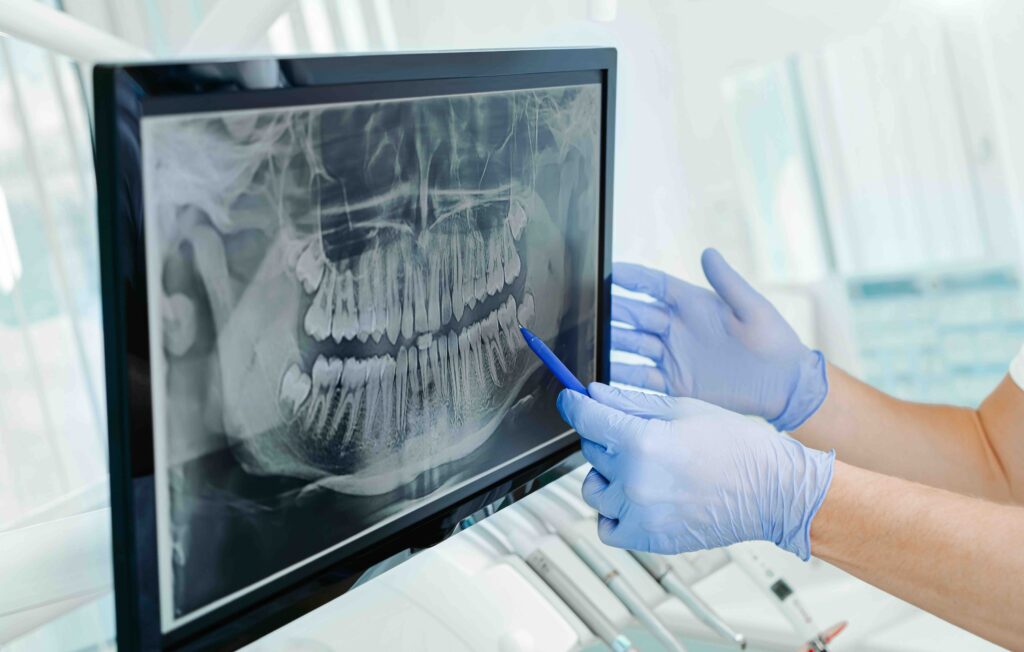
Still, imaging is often essential. A periapical X-ray can show decay near the pulp, infection around the root tip, widened periodontal ligament space, failing restorations, retained roots, and patterns that support trauma findings. Bitewing images help assess cavities between teeth and the condition of existing fillings. A panoramic image may be useful for wisdom tooth problems, jaw pain, or broader screening when the source is uncertain.
The key is correlation. If the patient points to the upper left side, the tooth is sensitive to percussion, the cold test lingers, and the X-ray shows deep decay close to the nerve, the diagnosis starts to align. If the symptoms are dramatic but the X-ray is quiet, the dentist has to think harder. Cracks, occlusal trauma, sinus involvement, neuropathic pain, and early disease all stay on the table.
Not every severe “toothache” is really a tooth problem
One of the hardest parts of emergency dental care is recognizing when pain is not coming from the obvious place. That is where rushed care can go wrong.
Sinus inflammation can make upper molars ache because their roots sit close to the sinus floor. Jaw muscle tension from clenching can mimic tooth pain, especially in patients under stress who wake with soreness and headaches. Trigeminal neuralgia can present as shocking facial pain. Salivary gland obstruction can create pain and swelling around meals. In rare but important cases, pain in the jaw can even be referred from cardiac issues, particularly in older adults or patients with classic risk factors and associated symptoms.
A careful Emergency Dentist does not overpromise certainty too early. If the findings do not line up, restraint is often better than drilling. Sometimes the right move is a temporary pain-control plan and close review in 24 to 48 hours, especially when symptoms are real but the source is not yet cleanly defined.
I have seen patients arrive convinced that one lower premolar was the problem because it “zapped” whenever they touched it with the tongue. The tooth tests were normal. The actual cause was a tiny ulcer on the nearby gum rubbing against a sharp edge of tartar. I have also seen the reverse, a patient fixated on sinus pressure who turned out to have a non-vital upper molar with a draining abscess.
Swelling changes the decision tree
Pain alone is one thing. Pain plus swelling is another.
When swelling is present, the dentist must determine whether it is localized and drainable, diffuse and spreading, soft tissue related, or rooted in periodontal disease rather than the pulp. A small gum boil near one tooth often points to a chronic draining infection. A tense, expanding swelling of the cheek can signal a more active and potentially serious spread.
At that point, the evaluation is not only about identifying the bad tooth. It is about deciding whether the source can be controlled in the office and how quickly. Draining an abscess, starting appropriate medication when indicated, opening the tooth for access, or extracting the source tooth may all come into consideration. Antibiotics alone are not a cure for most dental infections. They support treatment, but if the pressure and bacteria remain sealed inside a tooth or trapped around a root, the problem tends to return.
This is a frequent misunderstanding. Patients often hope for “just an antibiotic” because it feels like the fastest solution. In reality, a true emergency dental infection usually needs source control. The swelling may improve temporarily on medication, but unless the tooth is treated or removed, the cycle often repeats.
The patient’s medical history can change what is safe
A serious dental pain workup is never only about the mouth. Diabetes, immune suppression, blood thinners, heart conditions, pregnancy, recent cancer treatment, and certain medications all affect the plan.
A patient with poorly controlled diabetes may be at greater risk for infection complications and slower healing. Someone taking anticoagulants may need a different approach if extraction is considered. A person receiving bisphosphonates or certain antiresorptive drugs requires thoughtful planning around invasive procedures. Pregnancy changes both comfort strategies and imaging considerations, though dental emergencies should still be addressed.
Medication history matters too. People often arrive having already tried alternating acetaminophen and ibuprofen, leftover antibiotics from a prior illness, clove oil, or over-the-counter temporary filling material. Those details matter because they can mask symptoms, interact with proposed treatment, or create false reassurance.
What happens after the diagnosis is often a matter of priorities
Emergency appointments are designed to solve the immediate problem, not necessarily to complete every part of ideal long-term care in one sitting. That distinction is important.
Once the likely source has been identified, the dentist decides what can reasonably and safely be done that day. Sometimes definitive treatment is possible right away. A simple extraction of a badly broken tooth may end the problem in one visit. Drainage and initiation of root canal treatment may rapidly relieve pressure in another case. Recementing a crown, adjusting a traumatic bite, or placing a sedative dressing can stabilize a situation until a full appointment is possible.
In other situations, especially when diagnosis is clouded by severe inflammation, limited mouth opening, or patient distress, the immediate goal is more modest: reduce pain, reduce pressure, prevent worsening, and bring the patient back once tissues have calmed enough for definitive work.
Patients usually do best when they understand that “emergency care” may mean one of several paths:
- immediate definitive treatment if the problem is clear and time allows
- temporary stabilization to control pain and protect the tooth
- management of infection with prompt source treatment
- referral to a specialist for root canal, oral surgery, or trauma care
- referral to medical care if the issue exceeds routine dental safety
That kind of transparency reduces frustration. Serious pain makes people want instant finality. Dentistry does not always allow that, especially when anatomy, swelling, or uncertainty complicate the picture.
Why some teeth hurt far more than they look
One of the more frustrating parts of dental pain, for both patients and clinicians, is the mismatch between appearance and intensity. A tooth can look almost normal and still hurt ferociously if a crack reaches the right depth or the pulp is inflamed under an old filling. Conversely, a tooth with a large cavity may not hurt at all if the nerve has already died.
This is why emergency evaluation relies on pattern, not spectacle. The dentist is asking: does this tooth behave like a reversible irritation, an irreversible pulp problem, a necrotic infection, a periodontal abscess, a fracture, or something referred from elsewhere? The answer usually emerges from the combination of history, exam, tests, and imaging, not from any single dramatic finding.
It is also why patients should resist self-diagnosis based on internet photos or advice from friends. Two cracked teeth can require completely different treatment. Two swollen gums can come from entirely different causes. One “toothache” may be solved with a filling, another with root canal therapy, another with extraction, and another with no dental drilling at all.
What patients can do before they are seen
While waiting for an emergency appointment, comfort measures matter, but they should not delay care when symptoms are escalating. Rinsing gently with warm salt water may soothe irritated tissue. Cold compresses can help reduce swelling on the outside of the face. Over-the-counter pain medication, taken as directed and only when medically appropriate for the individual, can take the edge off. Keeping the head elevated sometimes helps with throbbing pain at night.
A few things tend to make matters worse. Placing aspirin directly on the gum can cause a chemical burn. Using very hot compresses may intensify swelling. Taking leftover antibiotics without guidance can muddy the picture and may not target the right organisms or duration. Waiting several days with increasing swelling, fever, or trouble swallowing is the biggest mistake of all.
Good emergency care is part detective work, part risk management
When people think about an Emergency Dentist, they often picture someone focused on speed alone. Speed matters, but accuracy matters more. The best urgent evaluations are efficient without being careless. They relieve pain while staying alert to the uncommon but dangerous scenarios, and they avoid irreversible treatment when the diagnosis is not yet solid.
Serious dental pain is not one condition. It is a symptom with a long list of possible causes, each carrying different risks and different timelines. A thoughtful dentist reads the pattern behind the pain, tests what needs testing, images what needs imaging, and chooses the next step based on evidence in front of them, not guesswork or habit.
That is what patients are really seeking in an emergency visit. Yes, they want relief, and fast. But they also need someone who can tell the difference between a sensitive filling, a cracked cusp, a dying nerve, a periodontal abscess, and an infection that is starting to move beyond the tooth. Those distinctions are what turn urgent dental care from temporary patchwork into proper treatment.
When that evaluation is done well, the patient feels it almost immediately. Even before the pain is fully gone, there is relief in hearing a clear explanation, a credible plan, and a realistic sense of what happens next. For someone in severe dental pain, that clarity is nearly as important as the anesthetic.
Dental Group Of Beverly Hills
8641 Wilshire Blvd #125, Beverly Hills, CA 90211, United States
+1 310-929-6335
FAQ About Emergency Dentist
What is considered to be a dental emergency?
Severe tooth pain, a knocked-out permanent tooth, uncontrolled bleeding, or a suspected dental infection can require urgent assessment. Contact a dentist promptly to describe your symptoms and arrange appropriate care. Trouble breathing or swallowing, rapidly spreading swelling, or a serious facial injury requires emergency medical attention; call 911 or go to an emergency department.
How to tell if tooth pain is serious?
Tooth pain needs prompt dental assessment when it is severe, persistent, disrupts sleep, or occurs with swelling, fever, pain on biting, or a bad taste. Symptoms alone cannot establish the cause, and an examination may be needed. Seek emergency medical care for breathing or swallowing difficulty, swelling affecting the eye or neck, or other signs of a rapidly worsening infection.
What are the red flags of a tooth infection?
Warning signs include facial or gum swelling, fever, worsening pain, pus or a bad taste, and difficulty opening the mouth. A dental abscess does not reliably resolve on its own and needs urgent dental care. Difficulty breathing or swallowing, rapidly increasing swelling, or eye involvement can indicate a dangerous complication and warrants immediate emergency medical care.